


MovingAI pathfinding benchmark parser in Rust
You know I worked a lot with pathfinding. In academia, the MovingAI benchmark created by the MovingAI Lab of the University of Denver is a must for benchmarking pathfinding algorithms. It includes synthetic maps and maps from commercial videogames.
Parsing the benchmark data, the maps, creating the map data structure and more, is one of the most boring thing I needed to do for testing my algorithms. For this reason, I think a common library for working with the maps specifications it is a must.
Choosing between Behavior Tree and GOAP (Planning)
I would like to expand the answer I gave on /r/gamedesign some days ago. The main point of the question was: how can I decide if it “better” to implement the decision-making layer of our game AI with Behavior Trees (BTs) or with more advanced plan-based techniques such as Goal Oriented Action Planning (GOAP) or Simple Hierarchical Ordered Planner (SHOP).
First consideration: this is not a technical problem
The first thing to know is that writing game AI is not a race for the best technology. Instead, it is just about choosing the right tool for serving the gameplay as well as possible. So, there is no urgency to select the most advanced algorithm. You need to choose the simplest one that is good enough for your game. Remember Pac-Man. The AI of Pac-Man is still utterly challenging, and yet it is exceptionally straightforward.
GameDesign Math: RPG Level-based Progression
Level-based progression is an extremely popular way of providing the player with the feeling of “getting stronger.” The system is born with Role-Playing Games (RPG), but it is nowadays embedded in practically every game; some more, some less. Even if it is entirely possible to provide progression feeling without levels and experience points, level-based progression is natural, direct, and linear, and it fits well in many (too many?) game genres.
However, not every experience-level progression is the same, and it is essential to design designing a fun system. Many games do that without much thinking: they just slap experience points and level, and that’s it. The general idea is that the more is your level, the more experience you need to advance to the next one. This is true, but it is just a small part of the design. In fact, you must keep in mind the effect of any gameplay element on the player, and you must be sure that what you do produces the emotion you want to convey.
Small rant about "blockchain" overuse

A lot of startups are using “blockchain” as a replacement hyped word for “distributed database”. Well, a blockchain is the most inefficient and slow “distributed database” ever created. Blockchain strength is not in being a database! Stop doing that!
The blockchain power is in avoiding divergent transactions, and guarantee a not falsifiable and immutable history. That is, no node in the system can alter the past of the chain. That’s it. They are huge and specific problems.
How to add a logo in Rust documentation

One of the feature I like the most on Rust is automatic documentation. Documentation is a pillar in language ergonomic, and I love that Rust spend so much time into making documentation and documenting code a much pleasant experience.
Rust autogenerated documentation (with cargo doc) looks good, every crate on crates.io get its documentation published on docs.rs, and, most important, every code example in the code is compiled and run as a “unit test” making sure that all the examples are up-to date!
Questions about Deep Learning and the nature of knowledge

If there is something that can be assumed as a fact in the AI and Machine Learning domain is that the last years had been dominated by Deep Learning and other Neural Network based techniques. When I say dominated, I mean that it looks like the only way to achieve something in Machine Learning and it is absorbing the great part of AI enthusiasts’ energy and attention.
This is indubitably a good thing. Having a strong AI technique that can solve so many hard challenges is a huge step forward for humanity. However, how everything in life, Deep Learning, despite being highly successful in some application, carries with it several limitations to that, in other applications, makes the use of Deep Learning unfeasible or even dangerous.
The Most Promising Programming Languages for 2018
This is the time of the year in which I propose 5 emerging/new languages that you should keep an eye on the next year. I’ve done it last year, and the year before, and the year before that.
This year, however, I am not in the mood of doing it. There are several reasons why. The first one is that this year there have not been a lot of movement on the new programming languages. I am sure there are a lot, but no one got enough attention to make into a list. Therefore, I am concerned that I will just starting to repeat myself talking about the same stuff.
Preserving a Cryptography book from 1897
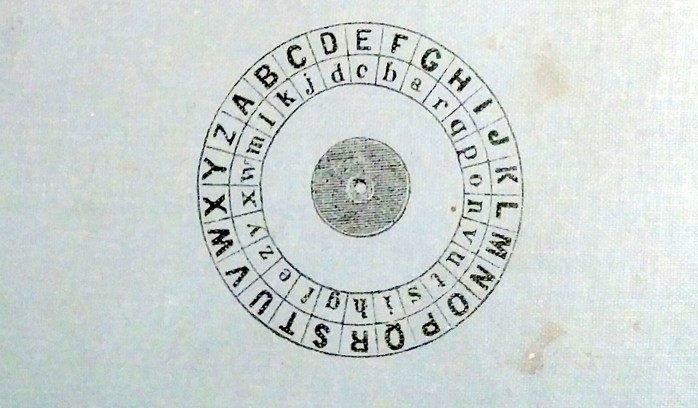
Some time ago I found on my grandma’s house an old Italian book on cryptography from 1897. Why a 120 years old book on cryptography was on my grandma house, is a mystery. I’d like to think that some grand-grand-parent was a late 19th century hacker. Anyway.
The book title is “Crittografia ossia l’arte di cifrare e decifrare le corrispondenze segrete” of Count Luigi Gioppi of Turkheim.
Well, I don’t know if this book is hard to find. In any way, I decided to take a photo of every page to share and preserve this book. The book is very old and some page is ruined, sorry if the quality of the photo is not optimal. I’ve done my best for not destroying the book in the process. :) I will release the photo one chapter at the time. Keep this page in the bookmark.
NaNoWriMo 2017 in Stats

This year I joined and won the NaNoWriMo challenge: write 50000 words for a novel in 30 days. I did it. Now the nerd side need to splat on this page all the accumulated stats.
The Novel
I think it is the proper way to do it: I need to talk about the novel. The novel is, of course, in Italian and it is unfinished. With 52k words I reached barely the beginning of the third act, more or less. Many things need to be rewritten, characters disappeared in thin air as soon as I discovered that I don’t need them… stuff like that. The usual way to do a first draft.
Procedural Calendar Generation & Lunar Phases

Here we are again! This is Part 3 of a small series on how to randomly generate a physically accurate calendar starting from planet’s orbital parameters. You can find the general motivation here, part one here and part two here.
Said that, here we go with the next part: lunar phases.
Why lunar phases
Lunar phases are incredibly important in a calendar. So important, that many of the early humanity calendars are, in fact, lunar calendars or lunisolar calendars. Of course, this is true if and only if the planet is lucky enough to have a big moon like us.
Secret Guide!
Congratulations! You discovered the secret guide!
Press ? to show/hide this guide!