


Seasons Generation from Orbital Parameters
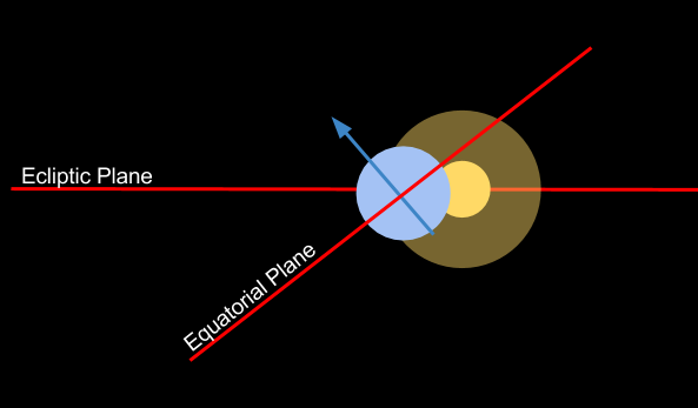
Welcome back to part 3 of the Procedural Calendar Generation series. In the first part we looked on how to compute celestial body position in a simple two-body system. The second part, instead is crash course on ellipse geometry.
In this part, instead, we will tackle a fascinating consequence of the cosmic dance of our planet around its sun: seasons. Seasons are a strange beast because their behavior depends on a huge amount of factors. We are used to our four seasons with mild springs and autumns, hot summers and cold winters. But these four season are just the consequence of our planet ecosystem, atmosphere, the peculiar axial tilt, if the orbit is particularly eccentric, distance from the sun in different period of the year can be a strong modifier too! In multi-star system, we can have more than 4 seasons, in planets with strange mechanics we can not have seasons at all (or better, the “season” depends on where are you on the planet).
Not every classification error is the same
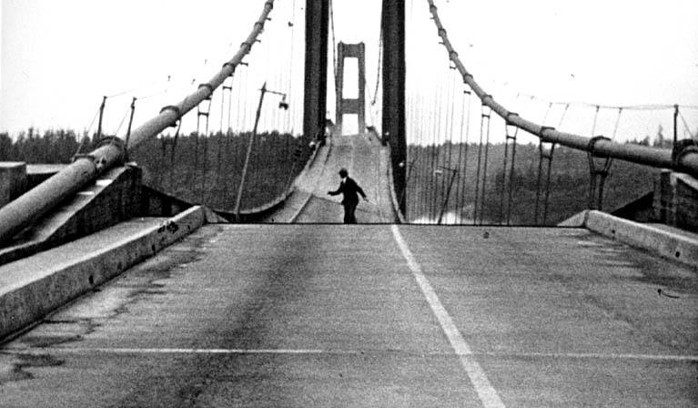
In this article, I would like to talk about a common mistake new people approaching Machine Learning and classification algorithm often do. In particular, when we evaluate (and thus train) a classification algorithm, people tend to consider every misclassification equally important and equally bad. We are so deep into our mathematical version of the world that we forget about the consequences of classification errors in the real world.
But let’s start from the beginning. Imagine a simple binary classifier. It takes some input \( x \) and return a Boolean value telling use if \( x \) belongs to a certain class \( C \) or not. When we pass through the algorithm a number of elements, we can identify only 4 possible outcomes:
Cuphead is not "hard"
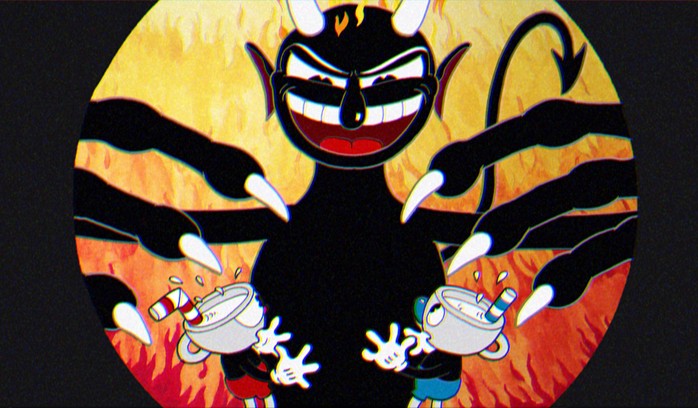
During the last few weeks, I’ve seen over and over people saying that Cuphead is hard. That it is brutal. That is the “dark souls of the side shooter”. For this reason, before this trend goes too far, it is time to make things clear: Cuphead is not hard.
Can a game that can easily beaten in a couple of hours be hard? No. It is challenging", yes. It requires multiple tries, for sure. But it is not hard and definitely not “brutal”. There are several reasons why Cuphead can be considered a very forgiving game.
A Dwarf Fortress calendar in PureScript + Halogen

My last week project involves PureScript and Halogen and the Dwarf Fortress calendar. I wanted to give a first-hand experience with some pure functional language for web front-end and, after discarding Elm, I ended with PureScript. I will not go on a comparison between PureScript and the rest of the world. If you want a comparison among the other candidates, you can look at this very detailed article. (There is ClojureScript too, if Clojure will ever came back from the graveyard).
Crash course on basic ellipse geometry
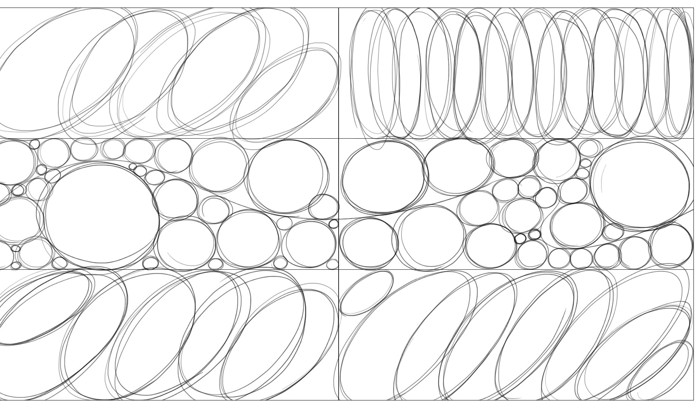
Because I started a small series about astronomical algorithms and the magic of math in space, I think we need to cover an important prerequisite. In the series, I will talk a lot about ellipses (duh), I will move from the semi-axis majors, to the periapsis, to eccentricity, to ellipse’s center and ellipse’s foci. I am concerned that things can get more complicated than expected if the readers does not know many of the geometric properties of the ellipse. For this reason, I put here this vade mecum on the ellipse geometry. A summary with all the basic points and lengths. A place that I can link everywhere I need to refresh a definition.
WordPress abandoning React: a Facebook horror story

Today, during my daily web crawling, I found this article by Matt Mullenweg. I will not dwell in details, you can read the full story in the linked post. But I try to give you the core of the announcement: WordPress just decided to abandon React. This is a big news, with many implications and a few lessons to learn. Let’s go by steps.
The Context
You are probably asking yourselves: why? A perfect summary is explained u/A-Grey-World comment on Reddit:
Computing planetary orbits between two celestial objects
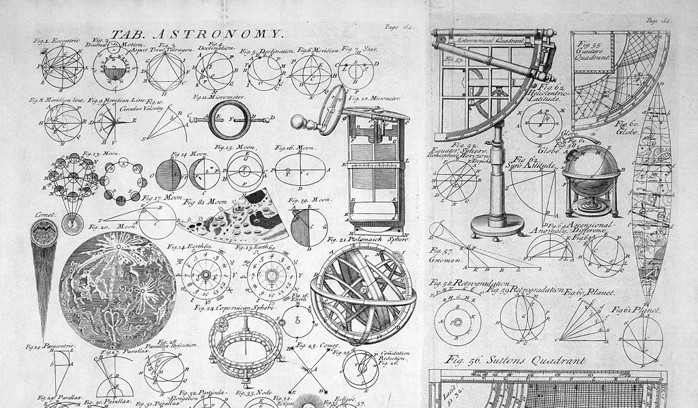
As you probably know, I am working (slowly) on an astronomically accurate calendar generator. All the orbital calculations involved are quite challenging, and I am discovering a lot. It is a lot of fun (except for the all the times I need to do some trigonometric magic to make some formula work). Anyway, during this process, I am reshaping and producing many many formulas. I am sure that in six months I will forget all the motivations behind them. For this reason, I want to try to save some of them here. In this way, I will have a good place where to look back at my notes and, moreover, I can be useful to other people trying to do some low-accuracy orbital calculations. I want to start from the beginning: orbital period and orbital trajectory.
How hidden variables in statistical models affect social inequality

Use of machine learning is becoming ubiquitous and, even with a fancy name, it remains a tool in the statistical modeler belt. Every day, we leak billions of data from ourselves to companies ready to use it for their affair. Modeling through data get more common every day and mathematical model are the rulers of our life: they decide where we can work, if we can get a loan, how many years of jails we deserve, and more.
Playerunknown's Battlegrounds did everything wrong. And doing so, it won.
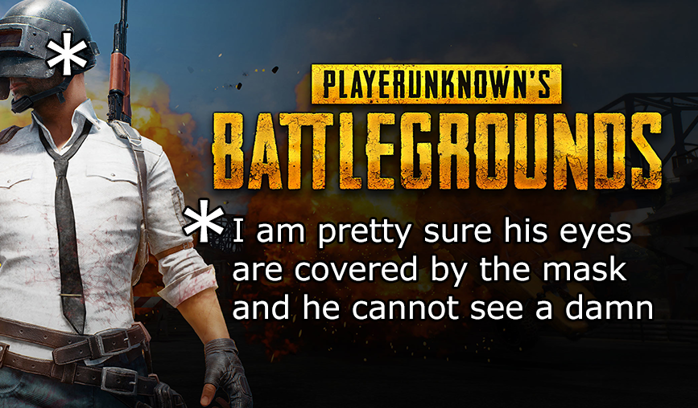
This small article is born from a discussion I had with a friend of mine this week. He was writing a review on Playersunknown’s Battlegrounds (from now on, PUBG) and he ended up talking about the evolution of the genre and its triumph over every other competitor. The article was good but it did not enter in detail about, what I think, it is a greatly important and interesting question: Why PUBG? Why not any of the other dozens of battle royal games we were plagued in the last years?
PUBG is clearly a winner in this competition. It sold more than 8 million copies on Steam only, and I can see the trend going with the future release on consoles. The problem, in my opinion, is that, on paper, there is nothing in PUBG implementation that seems “right”. Nevertheless, it won.
Machiavelli once said that success is 50% luck. That’s definitely true for PUBG. But the other 50% must be researched in the PUBG qualities. Analyzing them, despite the massive “errors”, it is very important for any game designer.
Against Addiction and Gambling-like Mechanic in Free to Play Games
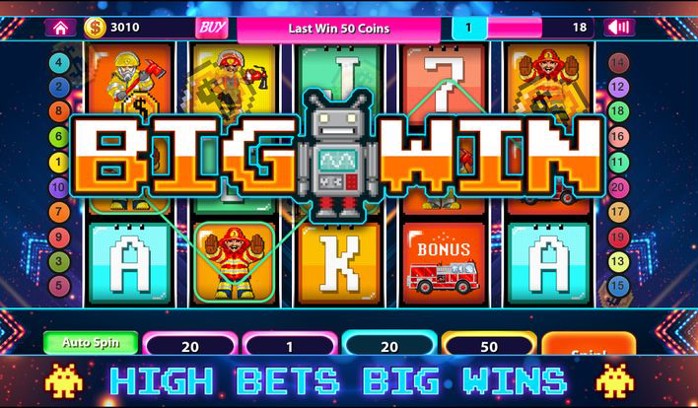
I want to take the cue from a last week massive Reddit thread on micro-transaction in Free2Play (F2P) games to give my opinion of the topic. I think it is important. We need to increase awareness that predatory practices in F2P games are incredibly close to gambling and share with it the same self-destructive and harmful addictive behavior. This is wrong in so many way: it is dangerous for the victims, it is dangerous for the game itself, and it is dangerous for the entire F2P model.
Secret Guide!
Congratulations! You discovered the secret guide!
Press ? to show/hide this guide!