


Turn-based Battle Systems - Chapter 2 - Analytical Analysis
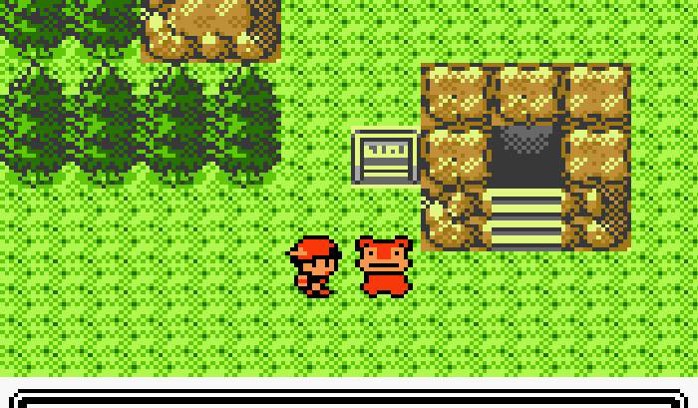
Hello everybody! It is time to continue with our series on Pokemon-like battle systems. In this chapter I will be more general: now we have our beautiful damage formula and a draft of our characters sheet, it is time to quickly check if the game the formula is balanced. There are a lot of questions that we want to answer as quick as possible. How much HP the enemy must have? What is a good value for the attack power? Is the damage formula fair enough? The critical strike is too much? The randomness is too much? Is it fun?
Except for the last question, we can try to answer them just looking at the damage formula. Obviously we can not answer all the questions now, but if there is some evident mistake, we will be able to catch it as soon as possible. There are several ways to analyse the tuning and balancing problem for a damage formula (and thus for a large part of the combat system): analytically, with Google Sheet/Excel, and with a quick software prototype.
In this article we will start from the first step: the analytical analysis.
The Challenge of Infinite Space

A.K.A. why Elite: Dangerous, Star Citizen and No Man’s Sky could be doomed to fail
Since the beginning of the videogame era, developers aim to reach a perfect simulation of the world. “So realistic!” is probably one of the most abused comment to a videogame ever. The videogame industry tried to reach realistic graphic, realistic sounds, realistic landscapes and realistic Non-Player Characters. However, reaching the perfect realism is a never-ending quest. As soon as we reach something, desire drives us to seek more.
Now that we have extraordinary graphic capabilities and stunning landscapes, some developers are going to raise the bar to a much bigger task: simulating the universe (or at least, the galaxy). We are not in the first (game) generation who is trying to achieve that (the original Elite is a very old game indeed), but we are for sure in the first generation who can reach this goal; at least to some extent.
We have the technical capabilities for doing amazing things: we can generate and simulate hundreds of billions of star systems, we can allow the player to travel to every one of them, explore and land on every square unit of the planet surface, every asteroid, every satellite. Software/games such Space Engine can clearly show us what a lonely developer can do in its spare time. Imagine what a game developers team can do on their full time job! It is not a surprise that several studios spotted the niche in the market and tried to use this power for a real game. After all, it is not “simulation of experience” one of the meaning of “game”?
How to design a Pokémon-like Combat System
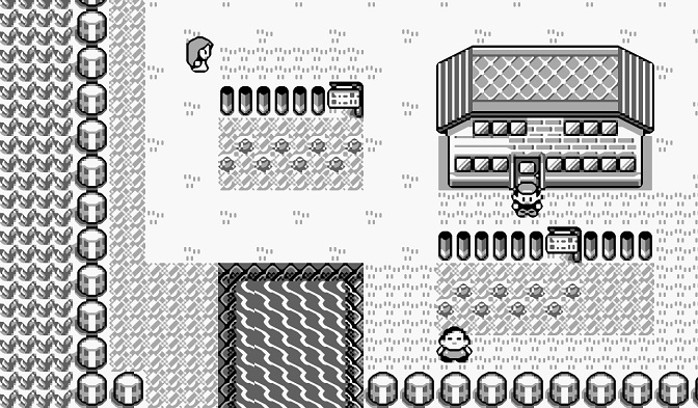
The Combat System is one of the main gameplay element in a game. Of course there are a lot of games without “combat”: puzzles, simulation games, driving games and so on. However (and you know this in the depths of your soul) that your game must have an amazing combat system because we LOVE beating the crap out of our enemies! Other games mechanics are good, but a good fight can be AMAZING.
There are several ways to implement a combat system but, at the end of the day, we can divide the heterogeneous world of combat systems into two big clusters: real time combat systems and turn-based combat systems. The first are exciting but they rapidly becomes hard to implement. We will need to do a lot of animations, tuning collision boxes and tons of graphical stuff. If you are a poor programmer like me, you cannot do that (sad face :<).
With turn-based combat system, instead, you can do the most complex things you can image! You can take into account hundreds of variables and statistics, create complex strategic combinations, evocations, magic, everything. You can use dice, cards, tokens, everything in order to emulate an epic combat between a dragon and drunk dwarf with a wooden leg. Because turn based combat systems are an explicit abstraction of a real combat, the player can absorb without complaining a bigger level abstraction. The same cannot be said for a real-time combat system in which just an ugly animation can be labeled as “ugly designed and sluggish combat” and provide frustration to the player.
So we are going to implement a turn-based combat system! But how? Well, this obviously depends on which type of turn-based combat system you want to do. For now, we will try to do a replica of the first turn-based game I’ve ever played: the Pokemon Combat System!
This is a nice combat system to replicate as a tutorial because is not too complex (especially in Gen. 1 or 2), but contains several tricky points that we need to handle! We will explore the design and the implementation of this combat system in details. We will see how to design the combat system, how to do a first balancing and test on paper, and every implementation step! So let’s start!
Let me introduce your worst rival: yourself

Here it is a new article on Medium on a simple game to beat (or to measure) your procrastination level! :)
Let me introduce your worst rival: yourselfWhen cheating with a robot is really cheating?
Hi guys. I wrote a small reflection on the future of Artificial Intelligence. The question is always the same: when would we consider a robot as a “living beings” with self-awareness, emotions and all the human equipment? My point is that we could stop asking ourselves this question because soon or later sex-robots will provide us the answer. Anyway, this is the article I wrote on Medium. Take a look. :)
A Month of Writing: August 2015

A month ago I started questioning my ability to stay focused on thing I like. Kill the procrastination monkey is the first thing to achieve any goal in life and I felt that I was losing that battle. Last year was not easy, mostly because I started feeling incapable to achieve anything useful in work. This, in turn, feeds the procrastination monkey, causing more frustration and so on. An evil infinite explosive mental and motivational cycle that drown you, slowly, silently. I had to break the cycle!
But where I could start? I decided to stress myself on an old obsession of mine: writing. As you know I have stories in mind and I have a deep need to tell these stories. There are many ways to express these stories (music or gamedev are the most important one for me!) but writing it is much less complex: it is just you, the story and a piece of paper. There is no technology involved, no extra abilities such as visual arts, no constraints, no distractions. I did not want to feed p-monkey with a lot of fake-problems to justify myself for not doing anything every day. So, I took a piece of paper and I wrote on it: I’ll write One Million Word of fiction. It is important to have some kind of metric to measure your progress and the number of words written is a perfect metric! Every night, at the end of the day, I can update the counter, see the target approaching and feel good about myself.
A month is passed and I want to share this small step with you.
Boost Hierarchical Pathfinding with Extended Graphs
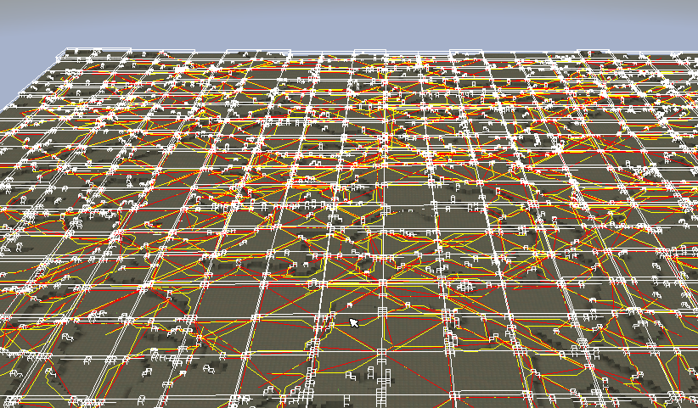
As you may already know if you follow me on Twitter (why not?), I often work with pathfinding. This thing started as a small side quest during my Ph.D. and then grew up to become the main topic of my future Ph.D. thesis. I’m still quite sure that this is not what I chose back in the day but, well, now that I’m on the dancefloor I have to keep dancing.
Returning to the subject, my work is totally focused on pathfinding with cognitive capabilities. This means that I try to embed pathfinding into a more high-level reasoning pattern or, if you prefer, to push high level elements - such as reasoning with keys and equipment - down into the pathfinding level. As a consequence I use hierarchical abstraction of the map space a lot and for “a lot” I mean that in the last year and half I’ve implemented Hierarchical Pathfinding (HPA*) at least 4-5 times in different context and languages.
Bacon Game Jam 09: Back in Business
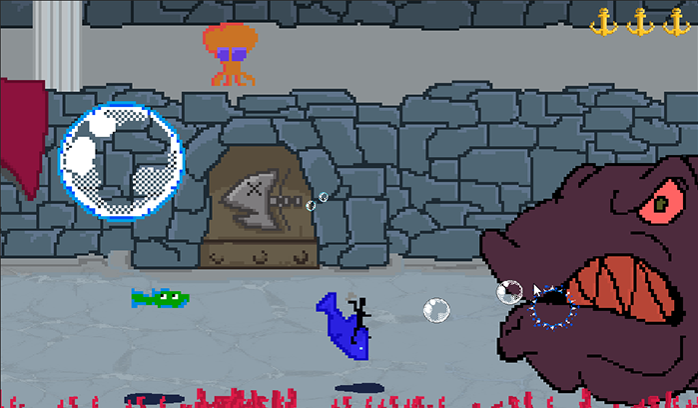
Hi everyone! I’m here to tell you the story of my last game jam: the Bacon Game Jam 09. It was a long time since my last game jam (and my game-dev stuff in general). I was a bit distracted by other part of my life and, in general, I wasn’t in the best mood. Because of this, I’m very happy to partecipate to this jam, also if the final result is not completely satisfying.
Anyway, let’s start!
Procedural Contents Generation in Modern Videogames
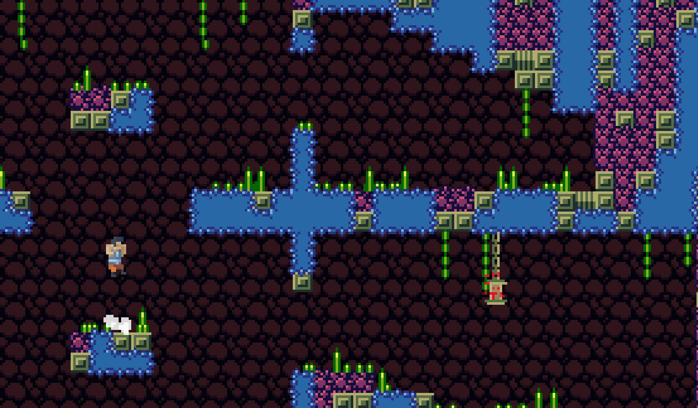
8th September 2016 Update: I uploaded these slides on SlideShare. You can see them here. Hi guys! In the last month I’ve prepared a presentation on Procedural Contents Generation history and techniques in commercial videogames. I did this presentation for a Game Jam some time ago and for a series of meetings in our university. I think it is a nice summary of the main elements of PCG in commercial games, so I think it is worth to share this presentation with you!
Weekly Inspirational #2
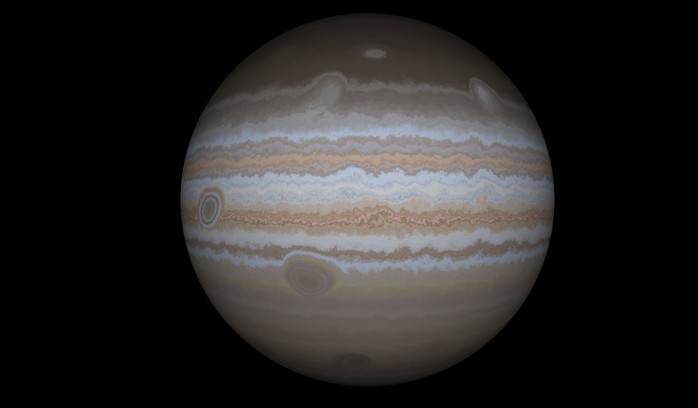
Here we are again! For five brand new inspirational articles found on the web (mostly on Reddit to be honest, but who care). This time we will see a lot of Procedurally Contents Generation algorithms, another emulation related article, and the smallest academic paper of all time! Let’s start!
Secret Guide!
Congratulations! You discovered the secret guide!
Press ? to show/hide this guide!