
The Grammar of Game Design
Game Design is a kind of language. It has basic elements, it has rules, and we use it to express specific sensations. Therefore, as a language, it has a proper grammar with its alphabet, its morphology, and its syntax and semantic. In this article I’ll briefly try to exapand this thought.
The Great Convergence of AAA Games
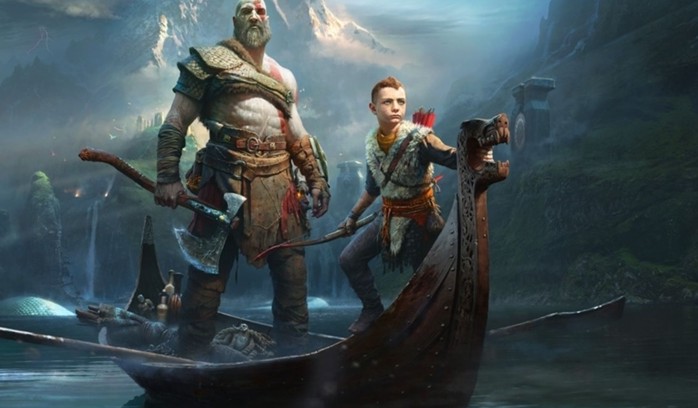
Let’s be honest: nowadays, almost every AAA game looks the same. They are all action games with RGP elements and a crafting system and some kind of open world. It is almost like playing the same game over and over again. The latest God of War (2018) is a good example of this year-long trend in the gaming industry that I called The Convergence. Let’s talk a bit about this.
Why I love Narration Through Discovery
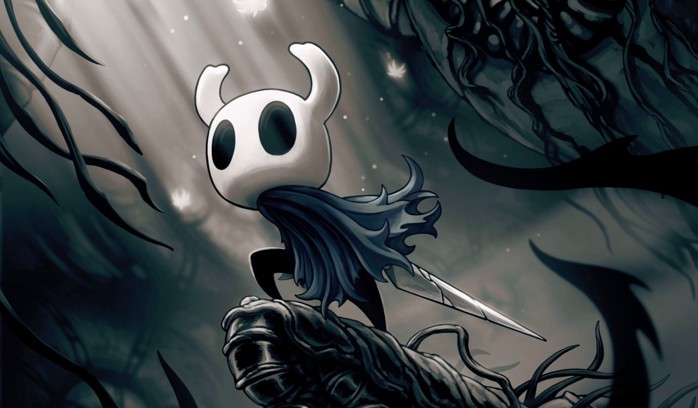
Yesterday I was reflecting about an interesting fact: in the list of “my favorite games of all times,” the top 10 is packed with games that share all a common element. The games are:
- Dark Souls
- Dark Souls II
- Well… every game of the soulborne genre.
- Hollow Knight
- The Legend of Zelda: Breath of the Wild
- And more.
Can you guess what they all have in common?
Sure, they all have a decadent setting (the world is falling or is recovering after a cataclysm), but there is a way more common design element: narration through discovery.
Five game design flaws of Quidditch and how to fix them
A fun case study for the most common game design flaws
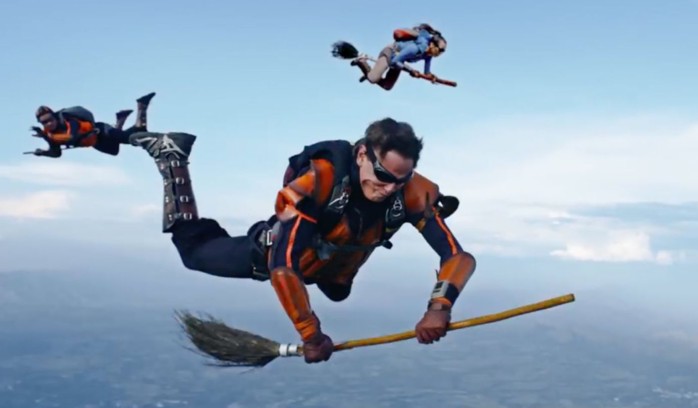
I am re-reading Harry Potter for the n-th time. Even it Rowling if trying hard to make me hate it, Harry Potter heptology still have a special place in my hearth. However, there is something I have always hated: Quidditch. It never made sense to me and I always found reading the Quidditch parts very boring. It looks like a game invented by someone who does not know a lot about sports and games.
Reading those parts for the n-th times made me realize that Quidditch may be a good way to showcase common rookie mistakes done by people approaching game-design for the first time (and it also provide meaning for my struggle). So, that’s what we will do today!
Game Design: Gathering Quests Sucks
Why we keep punishing players with horrible chores?
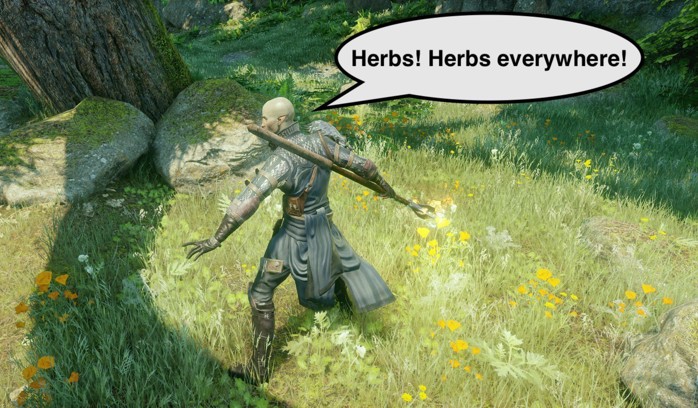
Some years ago I was playing one of those big AAA games, an epic RPG saga, a staple of single player games. While I was leading my army against the forces of evil, in one of the first outposts I meet a guy with a quest. What an epic quest it will ever be? What dangerous task requires the intervention of an epic hero?
“Collect 10 herbs.”
Small introduction to Random Walking
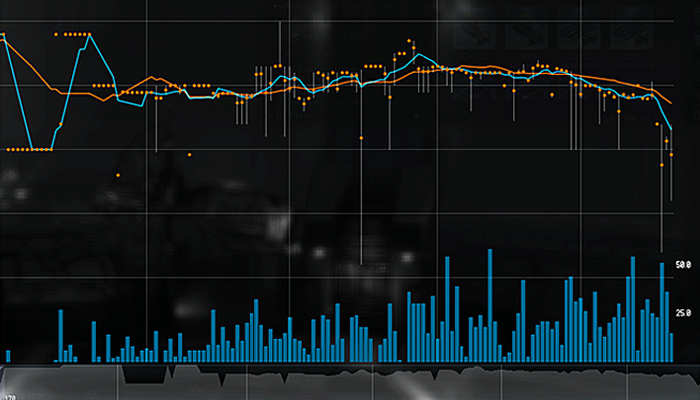
Random Walking is a handy technique to have in your gamdev toolbelt and - despite the name - it is most useful for everything but actual walking. With random walking, we define the output of a process that can be described sequence of random steps. The main difference with a random sequence is that each new value will be statistically near the previous one. Imagine a gold price chart and assume that the current cost is 10€ for 1g of gold. We cannot guess what will be the price in one hour but we can be sure that it will be around 10€ per gram, maybe 9.5€, maybe 10.5€. What is certain, is that a sudden drop to 1€ per gram would be deeply unlikely.
In this article, we will talk briefly about random walking and its ability to simulate many real-world processes such as resources prices, temperature, floating objects position over time, and much more.
Game Design: Taxonomy of Fishing Mini-games
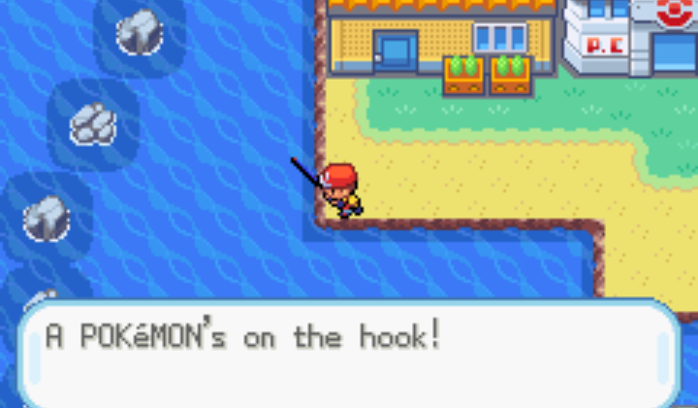
Fishing is probably the most common mini-game in gaming history. Before I started working on this article, I never realized how many games include a fishing as mini-game. The list is huge. Fishing is everywhere. It seems that it is not possible to have a game without the possibility for character to have a relaxing time fishing in a pond.
Everybody loves fishing! At least in games. We can imagine a deep reason for that. There must be something that attract designers, gamers and human in general to the ancient art of fishing. However, for the time being, we are not interested in this question. Instead, we want to explore the huge design space of “fishing games”.
In fact, the action of fishing has been dissected for decades by game designer. It is fascinating to see how many implementations exist for the same real-life action. So, it is time to see what they produced, what are the possibilities and how we can do something new in this domain.
Choosing between Behavior Tree and GOAP (Planning)
I would like to expand the answer I gave on /r/gamedesign some days ago. The main point of the question was: how can I decide if it “better” to implement the decision-making layer of our game AI with Behavior Trees (BTs) or with more advanced plan-based techniques such as Goal Oriented Action Planning (GOAP) or Simple Hierarchical Ordered Planner (SHOP).
First consideration: this is not a technical problem
The first thing to know is that writing game AI is not a race for the best technology. Instead, it is just about choosing the right tool for serving the gameplay as well as possible. So, there is no urgency to select the most advanced algorithm. You need to choose the simplest one that is good enough for your game. Remember Pac-Man. The AI of Pac-Man is still utterly challenging, and yet it is exceptionally straightforward.
GameDesign Math: RPG Level-based Progression
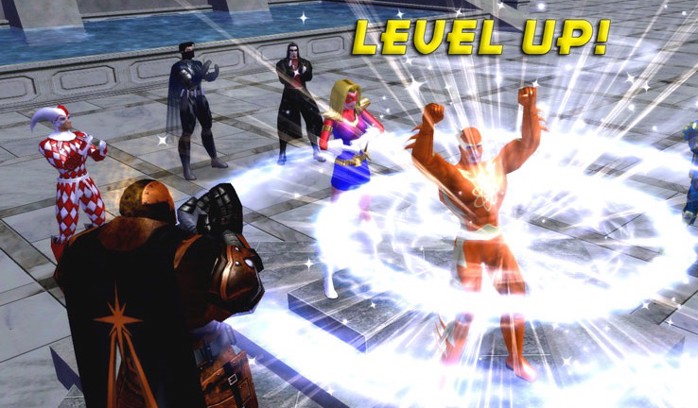
Level-based progression is an extremely popular way of providing the player with the feeling of “getting stronger.” The system is born with Role-Playing Games (RPG), but it is nowadays embedded in practically every game; some more, some less. Even if it is entirely possible to provide progression feeling without levels and experience points, level-based progression is natural, direct, and linear, and it fits well in many (too many?) game genres.
However, not every experience-level progression is the same, and it is essential to design designing a fun system. Many games do that without much thinking: they just slap experience points and level, and that’s it. The general idea is that the more is your level, the more experience you need to advance to the next one. This is true, but it is just a small part of the design. In fact, you must keep in mind the effect of any gameplay element on the player, and you must be sure that what you do produces the emotion you want to convey.
Cuphead is not "hard"
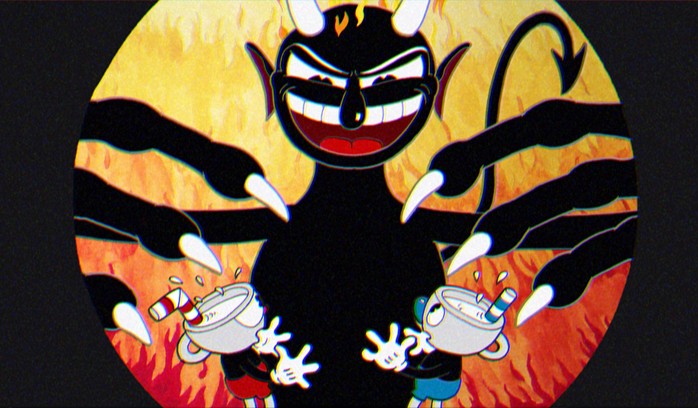
During the last few weeks, I’ve seen over and over people saying that Cuphead is hard. That it is brutal. That is the “dark souls of the side shooter”. For this reason, before this trend goes too far, it is time to make things clear: Cuphead is not hard.
Can a game that can easily beaten in a couple of hours be hard? No. It is challenging", yes. It requires multiple tries, for sure. But it is not hard and definitely not “brutal”. There are several reasons why Cuphead can be considered a very forgiving game.