
The Hyperdigestion of Modern Media
We consume so many media that we lost the ability to spend time with them.

I am increasingly bothered by the fact that any piece of media that comes out is already old in less than 24 hours. Everybody feels the urge to have a strong take, to dissect it and analyze it. In doing so, we lose the ability to let a piece of media filter through our minds and become part of us.
It Is Okay to “Vibecode”
Sure. It is not the best. But, if it works for you, who cares?

Critiques to vibecoding are often an example of right-Gaussian thinking. If you want to be a developer, you should avoid it. But if not, why should you not take advantage of new tools? Just be aware of the limitations. Here I try to explain why vibecoding is not a cardinal sin.
Notes on this Bluesky Moment
Some late reflections on Bluesky user growth and the state of social networks.

In the last couple of months, Bluesky, one of the many post-Twitter attempts to reshape the landscape of social networks, is living its best moment. Powered by Twitter’s blunders and by the continuous alienation provided by his power-hungry owner, Bluesky doubled its user base from around 10 millions users to the current 24 millions. It is time to annotate some of my thoughts.
Why do we feel retro-computing nostalgia?
What if the past was not better, but just more understandable?
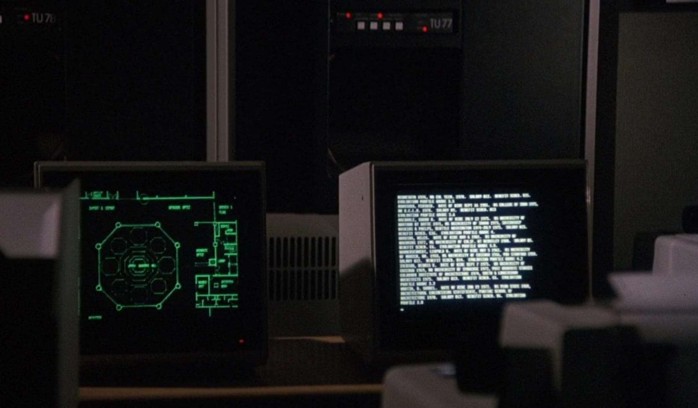
Why do we feel attraction for the past? Why do we look at the ‘old web’ with dreaming eyes? Why do we see old protocols and feel the lure of the past? Why do we feel nostalgia for old technology? In this article, I explore my reasons behind the retro-computing nostalgia.
Hades: a case study in storytelling for roguelike games

I know, I know: everybody loves Hades, the Super Giant’s latest jewel. These days, it is impossible to read any online game magazine without reading articles about it. This game has been on everybody’s mouth since its official release on September 17th.And for good reasons.Hades managed to raise the bar of the roguelike genre just when the genere started to become stale and boring. There are many reasons for this success but, in my opinion, Hades’ greatest accomplishment is that it was able to provide a glaring example of a roguelike with a solid storytelling.
The Great Convergence of AAA Games
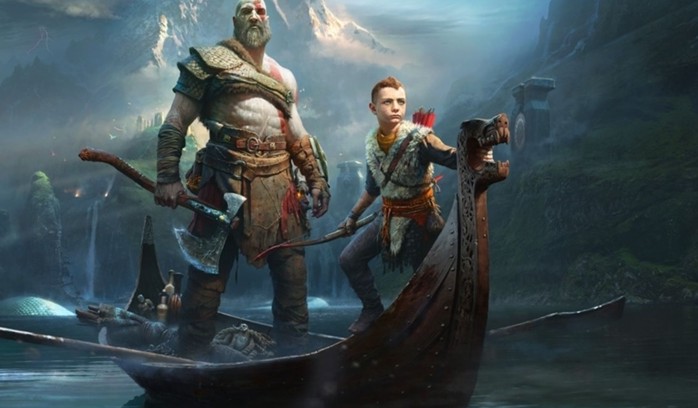
Let’s be honest: nowadays, almost every AAA game looks the same. They are all action games with RGP elements and a crafting system and some kind of open world. It is almost like playing the same game over and over again. The latest God of War (2018) is a good example of this year-long trend in the gaming industry that I called The Convergence. Let’s talk a bit about this.
Swift announces official Windows support — maybe too late

Swift is a pretty language that hits a sweet, sweet spot: it is a compiled language built around LLV, it is modern, it took advantage of decades of programming language design efforts, and it is esthetically pleasing. It is the kind of language that could have taken a lot of market shares. Unfortunately, official Windows support will come only with version 5.3. It may be already too late to wash away the “iOS Language” stigma.
What makes a story a good story
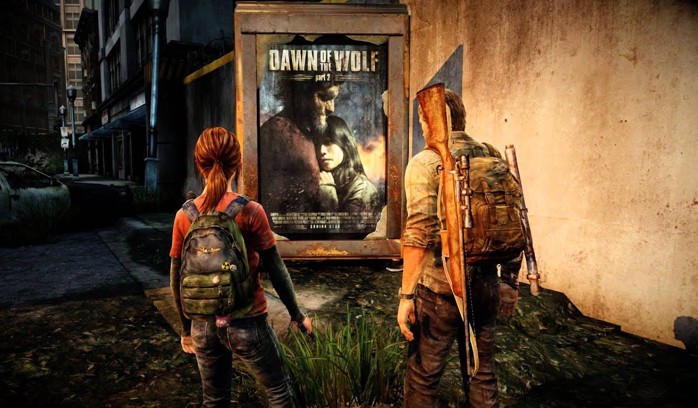
At the beginning of January, I put my hands on a dirty cheap Play Station 4 because, in the new house, I have no space for a gaming PC. Since then, I decided to make up for a bunch of games I missed in the last years starting from these two: Horizon Zero Dawn (Guerrilla Games, 2017) and The Last of Us (Naughty Dog, 2013). I approached them with diametrically opposed expectations, and in both cases, my expectations were very wrong. So I started asking myself why I was wrong and what I look for in games and narrative media.
Apple Arcade made my mobile gaming fun again

It is about a month that I am trying Apple Arcade on my iPad. During this month, I realized that it made my iPad a totally legitimate gaming platform. I had zero games on my phone and my iPad; now, I have four, and two of them were meaningful experiences. In short: I had fun on a mobile platform after years.
The Subscription Model Fatigue

Unlike many, I am usually fine with the subscription model: I understand why it is useful for the developers and I think that, if priced correctly, it is not bad for the users for the vast majority of use cases. However, I often ask myself if the model will be sustainable when the big majority of the apps will be subscription-based.